Boom Pump vs Line Pump: Which Concrete Pumping Method Is Right for Your Project?
Choosing the right concrete pumping method can save a project significant time, effort, and hassle. This article explains the key differences between boom pumps and line pumps to help you make a confident decision.
Whether you are pouring a house slab on a tight Orange, NSW residential block or managing a large commercial development in the Central West, selecting the right pump type matters. The two main options are the boom pump and the line pump. Each has clear strengths, and understanding those strengths means your pour goes smoothly.
What Is a Boom Pump and When Should You Use One?
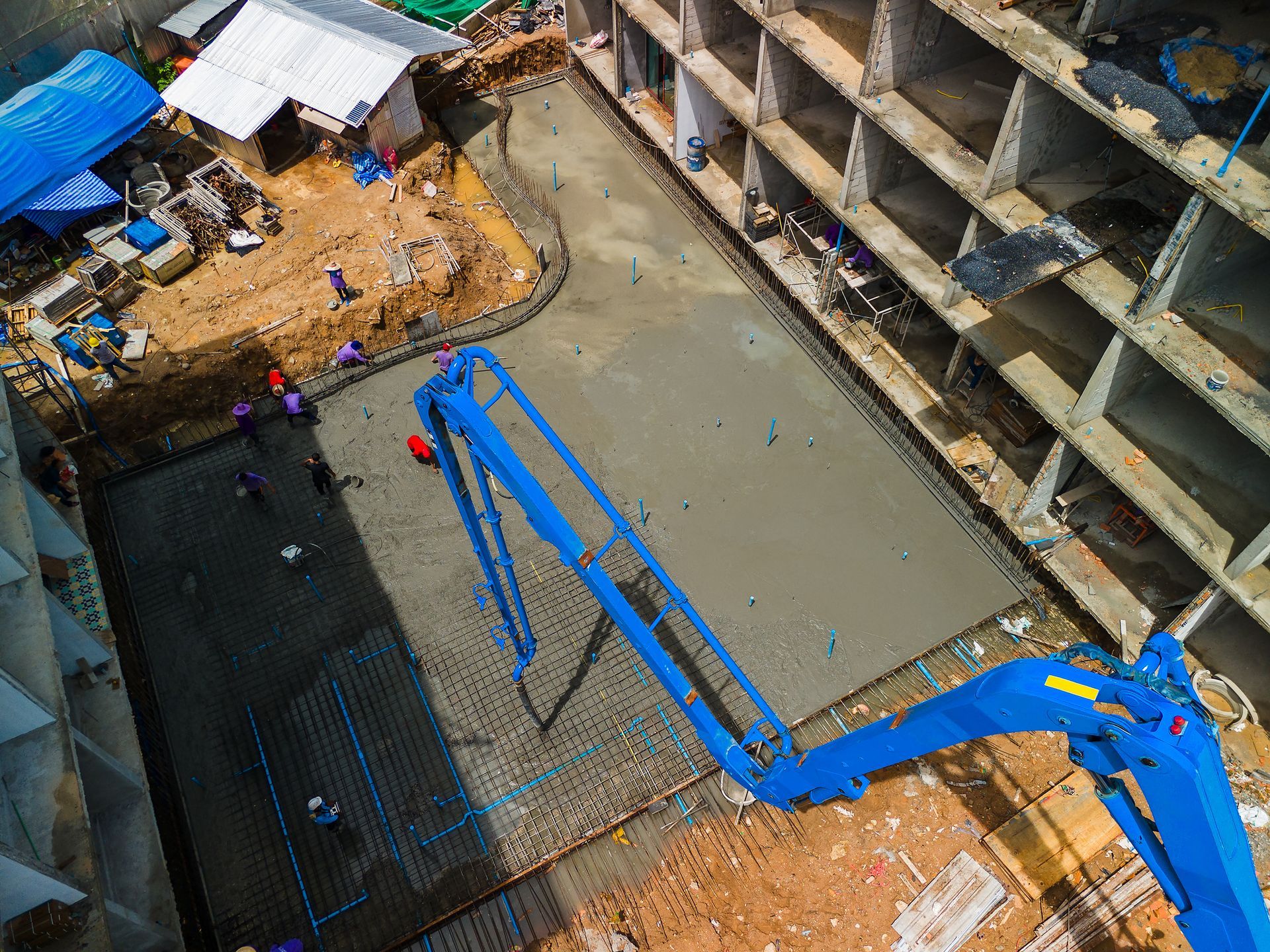
Boom pumps are truck-mounted units with a folding, articulated arm that can reach over structures, into upper-storey formwork, or across wide commercial pours. The arm extends from the truck, so the vehicle stays in one position while concrete is delivered precisely where it needs to go.
Boom pumps are well suited to large commercial slabs and warehouse floors, multi-storey residential or commercial buildings, bridge work and civil infrastructure, and any pour requiring concrete at height or over obstacles.
The operator controls the boom remotely, keeping the pour accurate and reducing manual repositioning. For large pours in Orange's growing commercial precincts, a boom pump can place high volumes of concrete efficiently and consistently.
One consideration is site requirements. A boom pump truck needs clear, stable ground and enough space to safely deploy its outriggers. Soft or uneven ground may not support the truck's weight, so assess this before booking. Overhead power lines and low-hanging obstructions should also be checked, as the boom needs a clear path to manoeuvre safely. A site inspection beforehand helps confirm the truck can be positioned without compromising the pour or nearby structures.
What Is a Line Pump and When Does It Make More Sense?
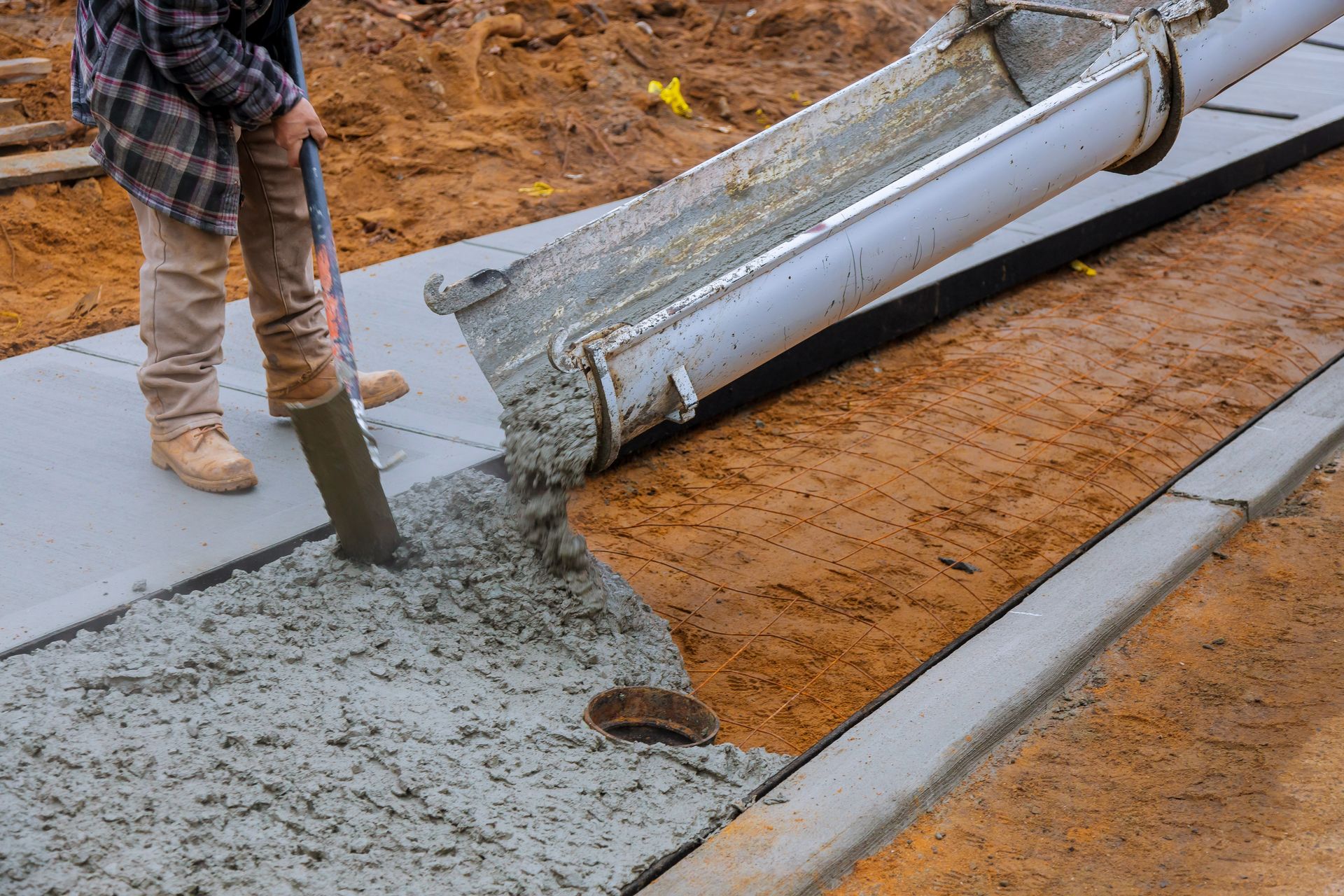
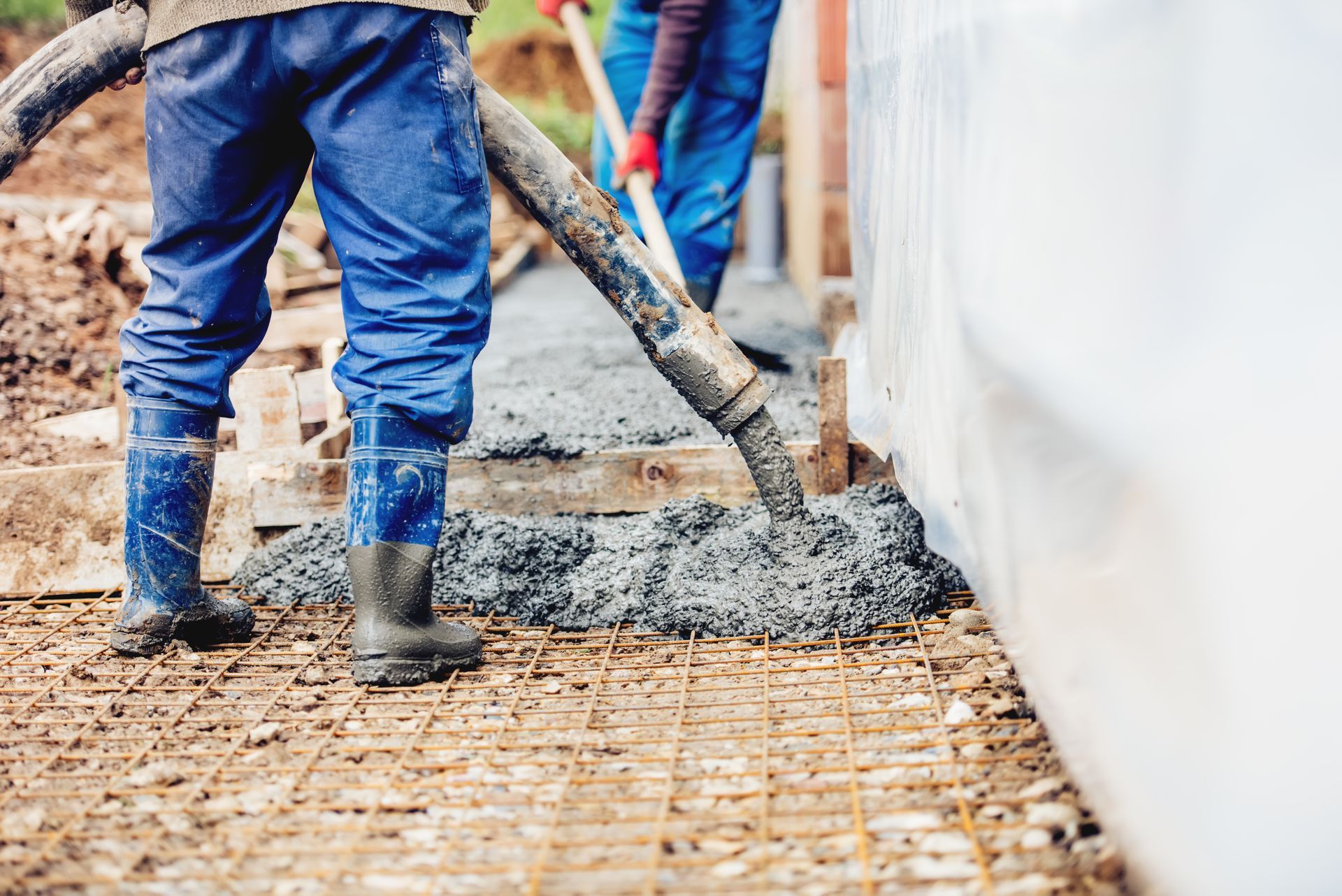
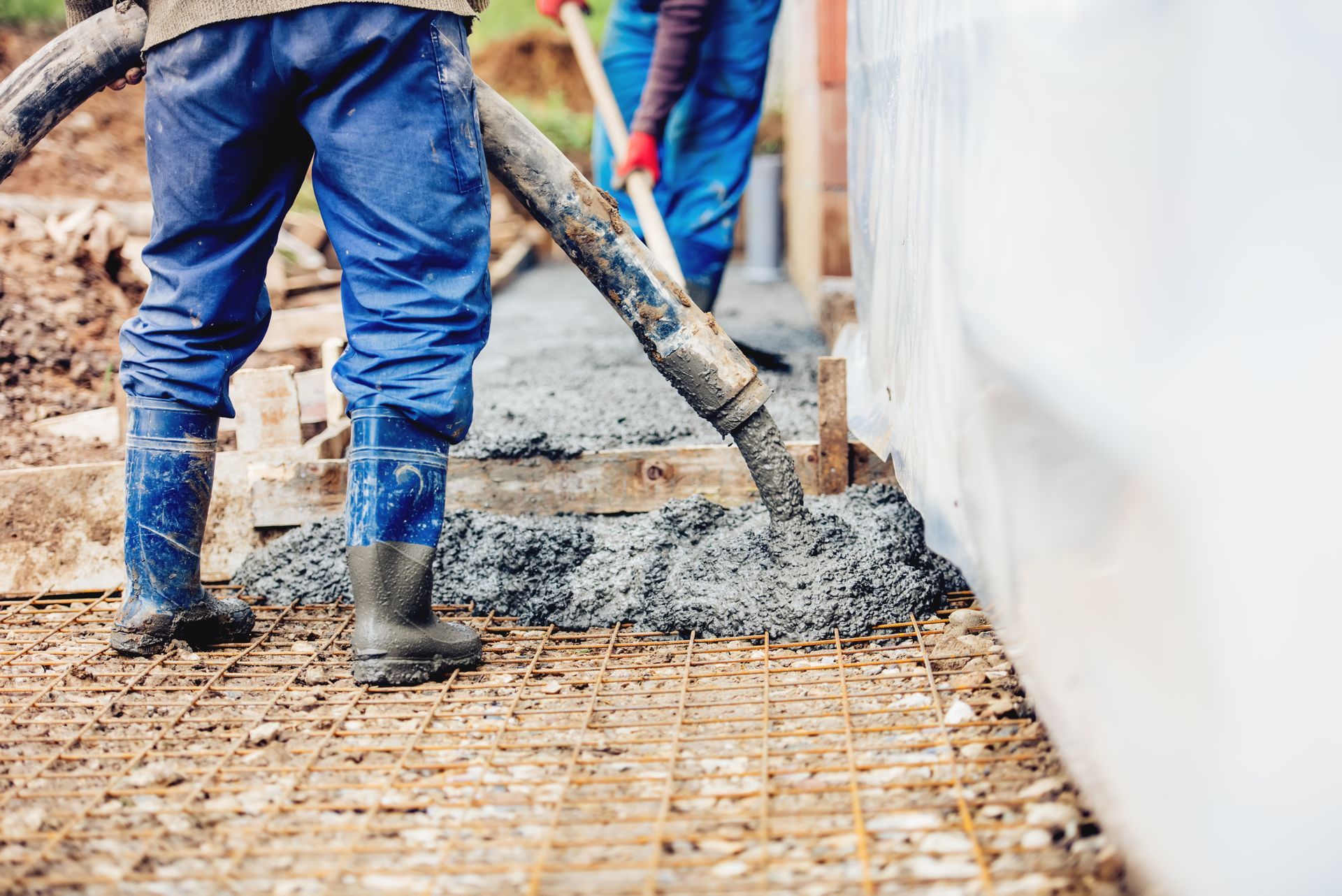
A line pump is a compact unit that moves concrete through flexible rubber or steel hoses. The hoses can run through doorways, around corners, or along narrow passages, giving excellent manoeuvrability on constrained sites.
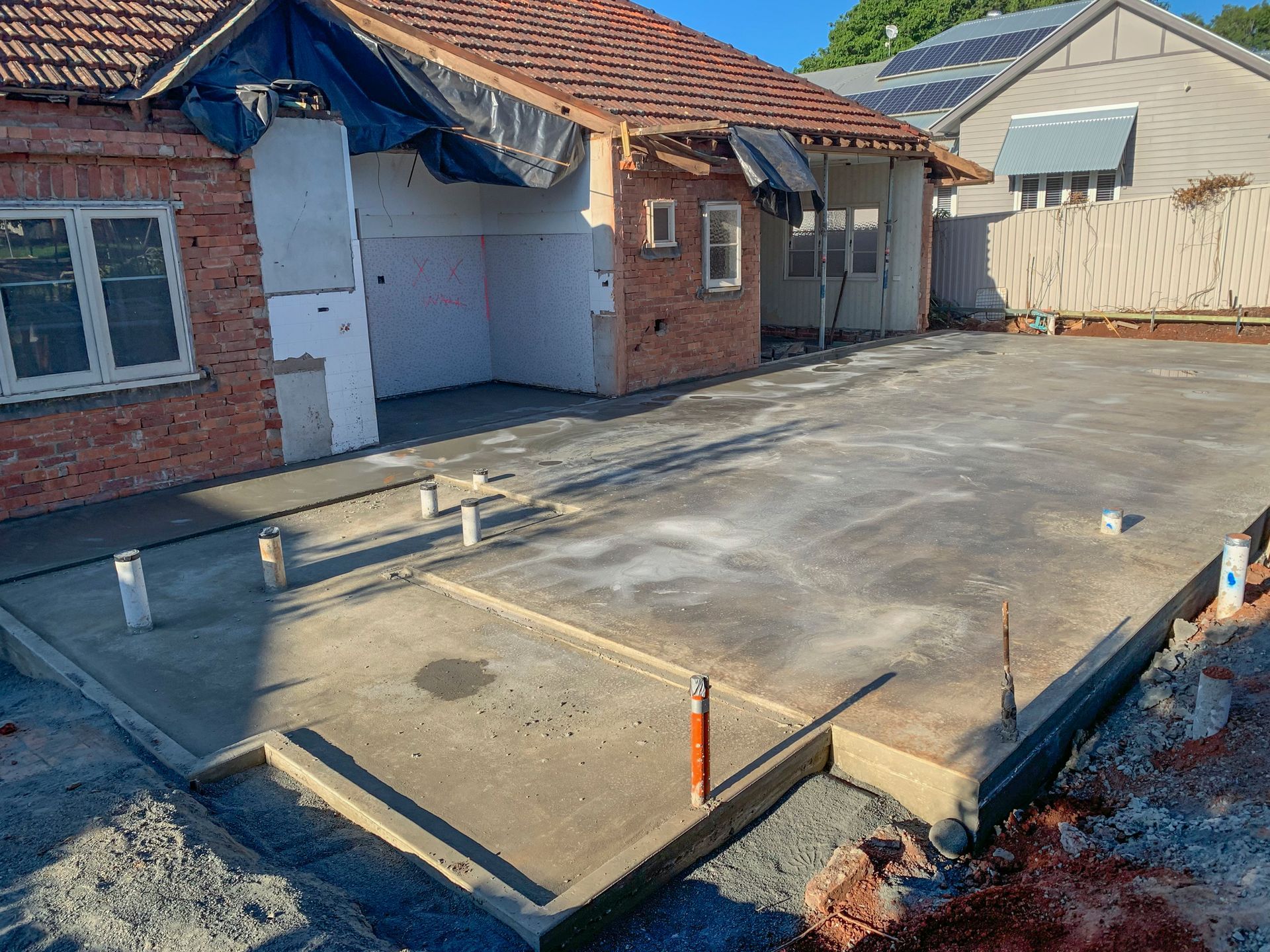
Line pumps are commonly chosen for residential house slabs, extensions, and footings, driveways, pathways, and pool surrounds, backyard pours where gate or side-access widths are limited, and smaller-volume pours where a boom pump would be unnecessary.
In Orange's established residential suburbs, a line pump can often reach the pour zone without removing fencing or disrupting the surrounding garden. Line pumps can also deliver concrete horizontally over considerable distances, which suits rural properties in the
Central West where the pour site is some distance from the road.
The trade-off is lower volume output, so line pumps are typically not the right fit for large-scale commercial pours that need to be completed quickly. Pour times can therefore run longer, which is worth factoring in if the project has a tight schedule. Talking through volume and timing with your concreter beforehand helps confirm a line pump will still meet the project's deadlines.
How to Choose Between the Two Concrete Pumping Methods
Volume and Pour Size. Larger pours generally benefit from the higher output capacity of a boom pump. For smaller residential jobs, a line pump may offer a more practical and cost-effective solution.
Site Access. If your site has tight entry points, narrow side passages, or overhead obstructions, a line pump's flexible hose system can often reach areas a boom truck cannot. Boom pumps need open, level ground for safe outrigger deployment.
Height and Reach. Any pour above ground level, such as a second-storey deck, a mezzanine slab, or multi-storey formwork, generally requires the vertical reach that only a boom pump can provide.
Project Type. Residential slabs, driveways, pool shells, and extensions suit line pumps well. Commercial developments, industrial slabs, multi-unit builds, and infrastructure projects are typically better matched to a boom pump.
What Are the Operator Responsibilities for Concrete Pumping in NSW?
NSW operators must hold a high-risk work licence for boom pumps, maintain equipment to Australian standards, and manage safe outrigger setup and exclusion zones.
What Should I Check Before Hiring a Concrete Pump?
Confirm site access, pump type suitability, operator licensing, equipment certification, contractor experience, and accurate ground conditions before booking, especially during peak construction periods.
Can a Concrete Pump Reach Rural Properties Near Orange?
Yes. Line pumps deliver concrete horizontally over long distances via extended hose runs, suiting shed slabs, rural foundations, and driveways on larger properties.
Ready to Discuss Your Project?
For concrete pumping serving Orange, NSW and across the Central West, Beecham Concreting brings over 15 years of experience to residential, commercial, and industrial projects of all sizes. Visit the concrete pumping services page or contact the team for a free, no-obligation quote. Call 0415 322 102 today.